
Bad Mommy
Milk Fed by Melissa Broder, I'm Glad My Mom Died by Jennette McCurdy, and new paid subscriber treats🍡🍿🍬🍦

This is Sad & Famous where once a month I offer up two short essays on something sad and something to do with fame in popular culture. I often include a section on beauty or shopping at the end. This month I face two books I was genuinely afraid to read and share my main summer survival tool. If you like this newsletter, would you mind sharing a quote or restacking? It’s a huge help in who gets to see my work. Your personal recommendations are the frontline against a complete AI takeover of how information is disseminated, taste is shaped, and culture is formed. Thank you!
🔮🔮🔮
Sad
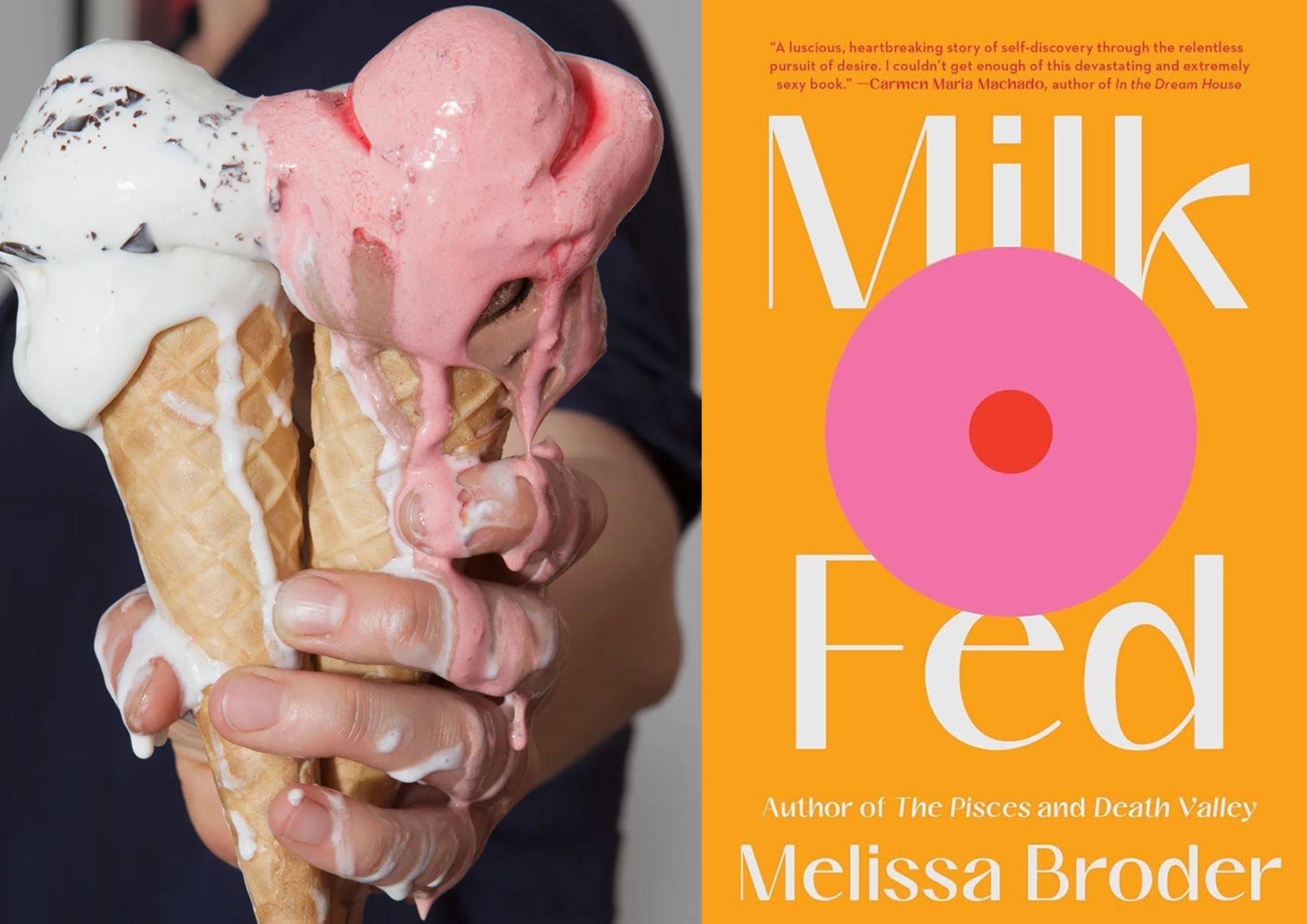
Though I am a big fan of Melissa Broder and have read most of her work (and reviewed her before here), I gave her 2021 book Milk Fed a wide berth. I had read in promotions for Milk Fed that the protagonist had an eating disorder and the book was largely about her relationship with food. Broder is not a gentle writer, she is a writer who excels most when she is directly confronting and exploring the shameful, the grotesque and the hidden. I knew that this book wouldn’t hold back, and as someone in recovery from an eating disorder, I was like, maybe I should take a pass on this one.
But that was back in 2021. I have been in recovery for about twelve or so years now, I have had my dips and slip ups and getting back on the wagon, but the general arc is upwards and I’m pretty familiar with the shape of the beast at this point. And tbh, the last five years of my life have been so hardcore that the eating disorder at this point is the least of my worries. I respect her, she’s with me, but like I have a stack of more pertinent crises to attend to atm— which is how I returned to the doorstep of Milk Fed. I feared it might horribly upset and trigger me but now I’m like— worse than what? lol. The anxiety about it just wasn’t as pressing. Broder recently started back up her podcast Eating Alone in My Car (I can’t recommend it enough, it’s basically a voicenote and does exactly what it says on the tin) and was discussing how her maternal relationship showed up in Milk Fed and I was intrigued and was like, let’s do it.
Broder’s novels exist at an interesting intersection of autofiction and magical realism that is unique to her writing. Milk Fed is about a young Jewish woman, Rachel, in Los Angeles, who is completely controlled by her eating disorder. The eating disorder extends from her mother’s tight grip over both her own and her daughter’s body. In therapy Rachel is encouraged to break communication with her mother for ninety days. She also reluctantly participates in some art therapy where she sculpts from clay the fat body she is most worried she might one day look like. Her therapist asks her if she thinks someone in that body might deserve to be loved and Rachel, tearful, furious, concedes that yes, she does. The next day Rachel encounters a woman working at a yoghurt shop with the same type of body Rachel sculpted in therapy and is overwhelmed with desire for her.
Broder, as I knew she wouldn’t, does not button up or soften the daily insanity of an eating disorder. When I was in treatment we were advised to avoid numbers (calories, weight) at all costs, and that is important, if you’re in early recovery this might not be the book for you. Rachel’s life is one governed by numbers, rules and her specific eating rituals. And Broder is explicit about it. The book opens with— “It didn’t matter where I lived…it didn’t matter where I worked…All that mattered was what I ate, when I ate, and how I ate.” Reading that opening line I knew I was at home among someone I intimately, uncomfortably, understood. Rather than being triggering, Milk Fed reminded me of what a boring punitive prison your mind/life becomes when you’re in your ED and how happy I am to not be trapped there anymore— how little I ever want to go back.
What I really wasn’t expecting from Milk Fed was a tender love story of recovery. Rachel’s relationship with yoghurt shop employee, Miriam, is transformative for her, it introduces Rachel to allowing genuine, bodily, unrestricted pleasure to be a part of her life. Miriam is described sensually, beautifully, she is the most desirable, holy almost, person in the world. I did not find the book to be fatphobic— I felt it was written from a place of understanding, not fear. This isn’t Ottessa Moshfegh’s paranoid, frantic cramming of donuts in the face of every fat person in her books. The love and powerful, yet reverent, desire Rachel has for Miriam is in such contrast to the hateful ways she views her own starved and beauty conforming body. As Miriam introduces Rachel to more and more food, and as they fall more in love, Rachel is able to grow into her queerness and into becoming less and less gender conforming. Milk Fed is brutal in ways, but it’s also the spectacular formation of the chrysalis that allows Rachel to germinate a new, functional self.
One of the most interesting aspects of Milk Fed to me was the spectre of Rachel’s mother— who is barely materially present in the book. The absence of Rachel’s estranged mother is felt the whole time though, it’s what allows Rachel to finally breathe, to look around at what she’s actually doing to her life. But as Rachel remembers her mother, we can see that her mother was never really there anyway, so consumed by her own eating disorder that she was always held in suspension, at arms length, never able to love her daughter, to show her how to love herself. Rachel’s longing for a maternal figure is often expressed in sexual fantasies, as if the only form of intimacy Rachel can mentally access is sex. As she grows through her relationship with Miriam, and allows herself to eat, her sexual fantasies disconnect from her being a passive, daughter-like figure to being an adult expressing their will and desire. Rachel is finally a self, not just a carefully maintained emptiness.
Famous
*CW: child abuse is discussed in this review
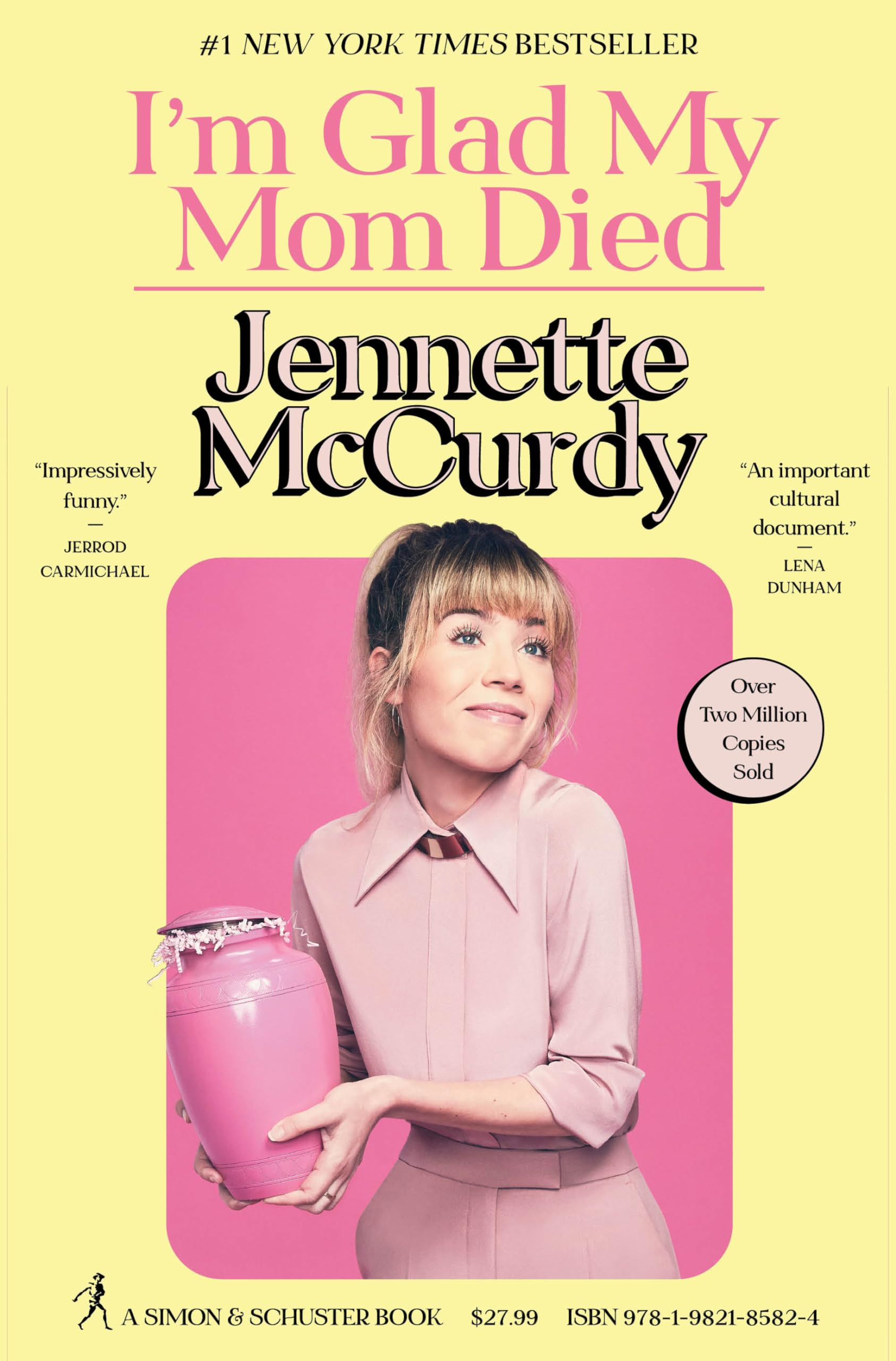
I was also afraid to read 2022 memoir I’m Glad My Mom Died by Jennette McCurdy. Obviously, it is one of the greatest titles of all time— a title for the history books. Paired with the cover, McCurdy holding a pink urn filled with confetti while wearing a kind of “whoopsie daisy!” expression, makes it impossible not to be curious about it. And I was curious! It was being written about and reviewed, breathlessly, by everyone and I picked up info about what the book contained. Unsurprisingly, it was child abuse. Outlets everywhere exclaimed that McCurdy endured showers her mother gave her until she was eighteen, along side breast and vaginal “exams”. And I thought, if that’s what is in the reviews, what is in the actual book? Like Gisele Pelicot’s memoir, like Chanel Miller’s, I wanted to want to read it, but I didn’t know if I could handle it.
Then, in April, I happened across an article about how Jennifer Aniston had signed on to play McCurdy’s mom in a tv show of the memoir and I was like …wtf? (I mentioned this at the end of April’s newsletter) Digging further I saw Aniston was also a producer of said tv show and was drawn to the role as she had a “very similar mom.” Then I read a Substack essay, which I can no longer find, in which the author said that I’m Glad My Mom Died is not only the best celeb memoir of all time but also just an important book in general. And I was like, fine ok. I’ll read it!
McCurdy’s memoir, like Broder’s Milk Fed, deals quite extensively with McCurdy’s eating disorder, foisted on her by her mother’s eating disorder. McCurdy’s mom, Debra, taught her how to calorie restrict as a prepubescent and ignored concern from doctors and fellow parents about McCurdy’s low weight. This was not only about controlling every aspect of McCurdy’s body but also keeping her looking small and young so she could have a long career as a child actor— which had been Debra’s dream for her own life and was never McCurdy’s. Debra was profoundly mentally ill, a narcissist and tyrant, shrieking and crying until she got her way in every situation. Her hoarding was so extensive the family slept on mats in the living room and ate off a big cloth on the floor, as the table and every bedroom were filled to the brim with Debra’s detritus.
The child abuse that McCurdy endured is extensive and shocking but her skill as a writer is such that you’re caught up in her voice, in the momentum of her writing, so you never feel bogged down as a reader. The chapters are short and McCurdy is very darkly funny throughout. As she grows up, despite Debra’s desperate attempts to keep her a little girl forever, her eating disorder branches out into other disorders— alcoholism, love and sex addiction, exercise addiction. It’s understandable, McCurdy has never been given an inch of space from her mother’s cloying obsession with her to discover anything about herself. She juggles her various damaging coping mechanisms as both distraction from what she’s endured and as placeholders for an actual self.
McCurdy is a dry, spare writer who does not belabour anything. Co-staring on a Disney show with Ariana Grande just as Grande began her ascent into super stardom, McCurdy notes that she found Grande annoying and was jealous of her and then moves on, where as one might expect this connection to be lingered on by a more opportunistic writer. Everything in I’m Glad My Mom Died feels like a beat, leading to not the crescendo of Debra’s death but to the years beyond when McCurdy finally had to face herself. It was interesting how not only McCurdy’s life, but her entire family was organised in total around the illness of one person. There was a collective delusion at work, one orchestrated by Debra, in which she must be protected at all costs from reality, in which her feelings and her needs became so paramount they eclipsed her husband and four children completely. This darkness remained for years after Debra’s death, and McCurdy bashed herself against it until she nearly broke apart— but instead was able to find a way beyond her consuming addictions and disorders to face the truth of her life. An incredible accomplishment as a person and as a memoir.
My Fan
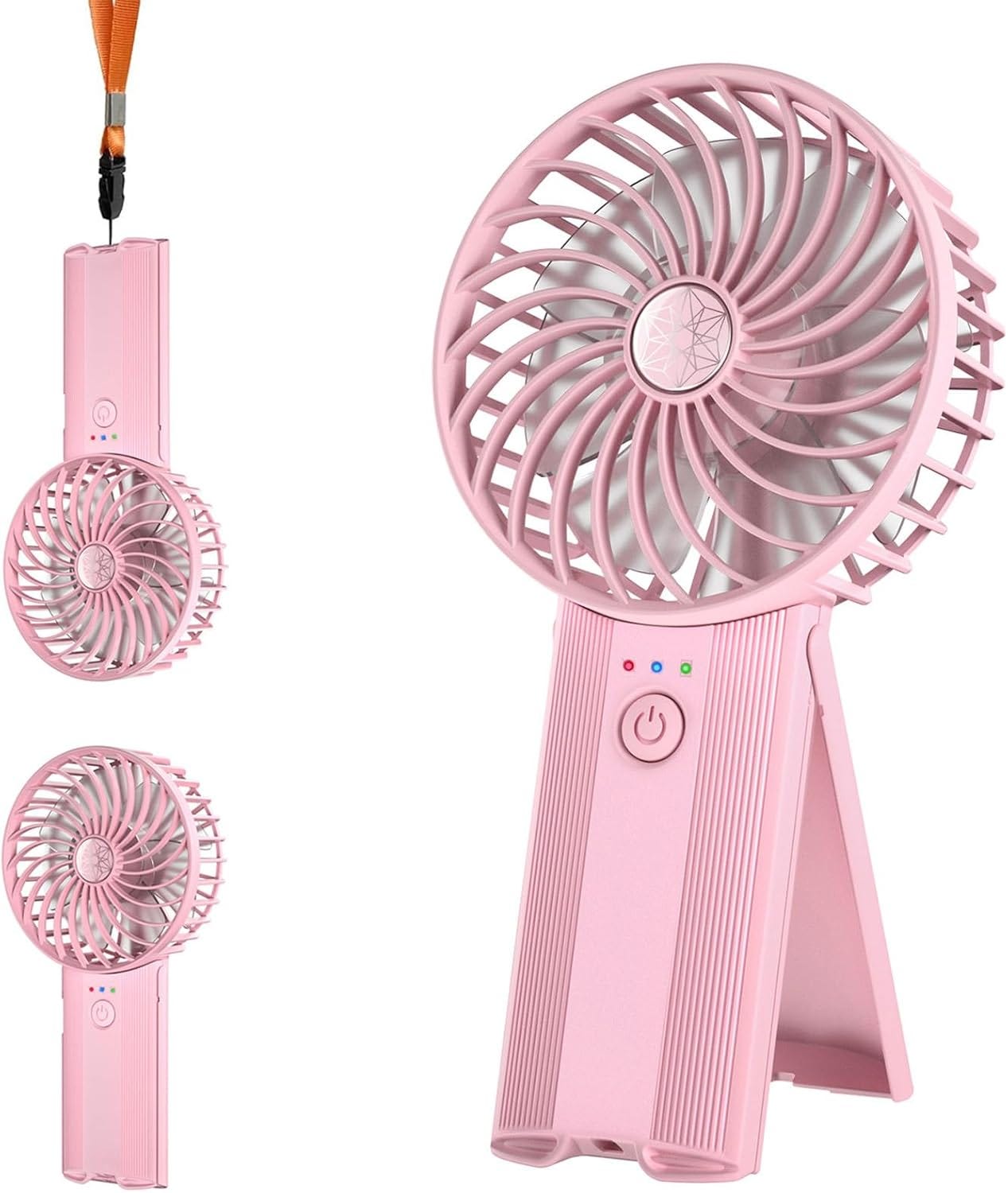
This is my #1 tool of summertime. I got it off Amazon and I have two of them. This particular model seems to be sold out but there’s many versions of similar fans. Any search for “handheld” and/or “portable” fans should bring up lots of options. The main things to watch out for would be that it’s small enough to fit easily in a bag, so you can bring it with you places, and that it has some kind of self standing capability. Mine I would say is similar in size to a small water bottle, but is thinner than a water bottle. I would also look for one with multiple speeds. It should be small enough to not be noticeably loud, even on a high speed. I’ve been living in Europe for the past decade and this is a place that doesn’t believe in air conditioning OR fans (or screens on windows!), which can easily turn summer into a hellscape for me. But this I can take on buses, to concerts, with me in line at Boots when the heat is still on at the end of May, and it makes a big difference. I was just staying in a hotel during cloying, humid weather, and having my little fan blowing on me at night from its stand on the bedside table was a life saver. Pair it with a mini spray bottle full of water and you can save your own life if you’re on the verge of melting!
Paid Subscriber Party
I turned on the paid subscriber option awhile back so people had the option of supporting this newsletter if they’d like to (thank you!!) but did not offer any benefits for doing so, in part because I wasn’t sure what I would do and I didn’t want to make a commitment to doing an extra thing, like writing an additional piece, if something happened where I didn’t end up having the juice to do it. However, after thinking about it for awhile I’m changing it up.
The main jam of this newsletter, the once a month essay on something sad and famous, will always be free and always be the main crux of what I do here. But I have thought of some fun extra things that would be enjoyable and easy for me to do for people who wanted to be paid subscribers. Each month for subscribers I might do one of the following things:
make a silly Canva presentation of some niche cultural topic
send out a roundup of current interesting celeb gossip
send out a list of my current media recs
send a voicenote of me reviewing memoirs and books I’ve read
do a ‘what’s in my bag’ type thing
feature a product I’m currently using all the time
If any of that sounds fun to you, you can become a paid subscriber here! I have the monthly charge as low as Substack will allow me to go. I also set up an “eyekon” level of adjustable yearly support (iykyk) which would include me mailing you a sticker collage. There’s a discount if you sign up as two or more. New paid subscriber benefits start in July.
I want to add that if you don’t want to become a paid subscriber I am still VERY EXCITED AND GRATEFUL YOU ARE HERE!!! I can only afford to subscribe to a handful of places myself, so I get it. Also if you’d like to become a paid subscriber but the cost is a barrier to you, just DM me on Substack or reply to this email and we’ll figure something out💜
Me Elsewhere
I write a column about the materiality of books for Zona Motel, here’s one I wrote about books I keep even though I haven’t read them
I write a newsletter about home aesthetics called House Cravt, here’s one about why your home looking contemporary is not something you should worry about
omg gonna read!!!